
Lesson 2 - Health Risks and Benefits of the Gluten-free Diet
2.1 Nutritional issues of CeD and the gluten-free diet
Nutritional issues at the time of diagnosis
The recommendations for the intake of macro-and micronutrients are the same as for the general population. Only in the beginning of treatment, a protein- and energy-rich diet should be encouraged if the patient suffers from significant weight loss and malabsorption. Normal protein and energy intakes can be advised as soon as the absorptive capacity has been restored (García-Manzanares & Lucendo 2011).
At the time of diagnosis, patients may present with deficiencies of micronutrients absorbed in the duodenum and jejunum. The severity of deficiencies depends on how long the disease has been ongoing and on the degree of malabsorption. In particular, deficiencies of iron, folate, zinc, calcium and fat-soluble vitamins occur, but also of vitamin B12, although it is absorbed in the ileum (figure 11).

Figure 11: Nutrients commonly affected by poor absorption in the small intestine. Source: FocusINCD own
Whether dietary supplements should be used depends on the severity of the deficiencies, the general health status, age and life stage (e.g. rapid growth or pregnancy) and other related conditions such as secondary lactose intolerance. The intake of dietary supplements can be discontinued when the absorption capacity improved and deficiencies have been resolved (Niewinski 2008).
Nutritional imbalances under the gluten-free diet
Nutritional imbalances, both deficiencies and excess intakes, are commonly observed when patients follow a gluten-free diet. The natural gluten-free diet is not unhealthy per se and these imbalances occur due to poor individual food choices. Wheat is one of the most important staple crop and wheat products significantly contribute to our intake of energy, protein, fibre, vitamins (esp. B vitamins), minerals and phytochemicals. Consequently, avoidance of wheat requires high-quality substitutes (Shewry & Hay 2015).
When the diet is based largely on commercial and highly processed foods, excess intakes of energy, fat (especially saturated fat) and sugar are common, while the intake of minerals and vitamins is typically too low. Low fiber content is also common and is a consequence of the production of gluten-free food with refined instead of whole grains. Moreover, many of the naturally gluten-free grains have a lower fiber content, especially corn and rice which are most commonly used in gluten-free bakery products (figure 10) (Gobbetti et al. 2017, Saturni et al. 2014, Theethira & Dennis 2015). To compensate for the missing food technological benefits of gluten and to give these foods a better taste, additional fat and sugar are often added (Scherf & Köhler 2016, Saturni et al. 2014).
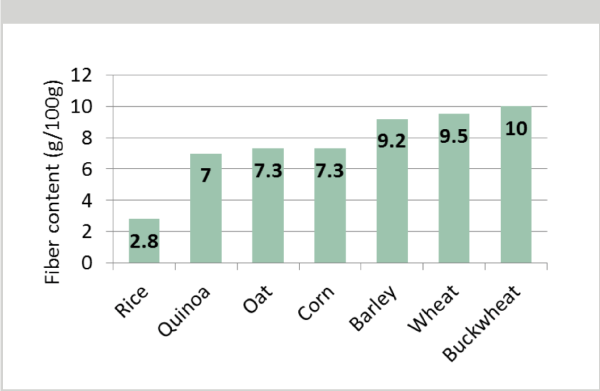
Figure 12 - Fiber content of different gluten-containing and gluten-free grains.
Source: FocusINCD own with data from Saturni et al. 2010
It has also been observed that some patients limit their carbohydrate intake to a minimum due to the fear of accidental gluten exposure and increase their intake of fat instead. Others compensate for the dietary restrictions by increasing their intake of foods high in fat and sugar, especially from snacks (García-Manzanares & Lucendo 2011, Saturni et al. 2010, Torota et al. 2015, Mariani et al. 1998).
In the end, this dietary pattern may increase the risk of adverse health conditions such as overweight, metabolic syndrome, heart disease and diabetes. Micronutrient deficiencies in this group of patients can persist but are usually attributable to poor dietary quality rather than to malabsorption (Saturni et al. 2014, Tortora et al. 2015).
How to counteract nutritional imbalances
In order to increase the quality of the gluten-free diet, naturally gluten-free foods, including whole grain gluten-free cereals, pulses, legumes, fruits and vegetables, fish, lean meat and dairy products should be promoted in their diet. As mentioned before, commercial and highly processed gluten-free products should only be consumed in moderation. The nutritional quality of these products has been increasing in the past years. While historically rice, corn and potatoes were the main substitutes for wheat, nowadays a number of seeds that are more nutritious and grains are used to improve variety, palatability and nutrient quality (Kupper 2005). Especially so-called minor- and pseudo cereals (e.g. amaranth, quinoa, buckwheat, teff) have recently received a lot of attention, because they contain high amounts of high-quality protein as well as micronutrients and unsaturated fatty acids and have a similar or even better nutritional profile than wheat (figure 11). It has been demonstrated that three servings of pseudo-cereals per day can positively affect the nutrient profile in patients with CeD and are more cost-effective than commercial gluten-free products. This may eventually also have a positive impact on long-term dietary adherence (Lee et al. 2009).
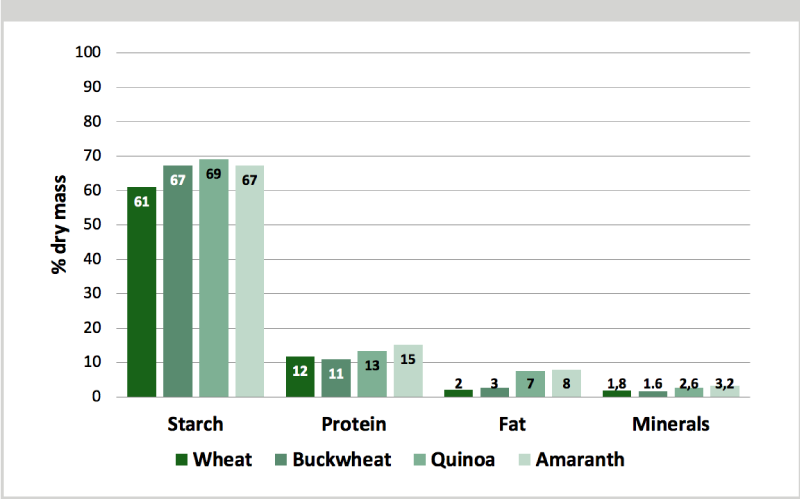
Figure 13: Comparison of starch, protein, fat and mineral content in wheat compared to gluten-free alternatives.
Source: EneA own with data from Staturni et al. 2014