
Lesson 1 - The Gluten-free Diet: What can Patients with Celiac Disease Eat?
1.1 What is gluten?
The term gluten is used to describe a mixture of storage proteins which are found in wheat, rye, barley and related grains. It is stored in the endosperm of the grain which is the source of nutrition for the growing plant embryo (=germ) (figure 1).

Figure 1: Anatomy of a grain.
Gluten is contained in the endosperm of grains. Source: FocusINCD own
Gluten accounts for 85-90% of the protein fraction and is a complex mixture of hundreds of proteins. The main classes are prolamines and glutelins (figure 2). The prolamines rich in proline and glutamine are mainly responsible for the development of signs and symptoms in susceptible individuals. The storage proteins of different gluten-containing grains differ slightly, but they are collectively referred to as gluten (Biesiekierski 2017). Oats are less closely related to wheat, rye and barley, therefore its prolamin fraction, called avenin, is sufficiently different. This is the reason why almost all people with celiac disease (CeD) tolerate oats very well as long as cross-contamination with gluten-containing grains is excluded (Gilissen et al. 2016).

Figure 2: Gluten proteins in the major gluten containing cereals. Source: FocusINCD own
Why is gluten so useful in food production?
Gluten has many valuable functions in food technology, making it a widely used component to improve texture, moisture retention and flavor, even in foods not based on grains (Balakireva & Zamyatnin 2016, Biesiekierski 2017). Wheat gluten is especially utilized for its ability to promote gas retention, which produces bread of high volume and typical crumb structure. Figure 3 shows that gluten-free cereals (3 d to h) produce breads with a considerably lower volume than gluten-containing cereals, particularly wheat (3a) (Scherf & Köhler 2016).
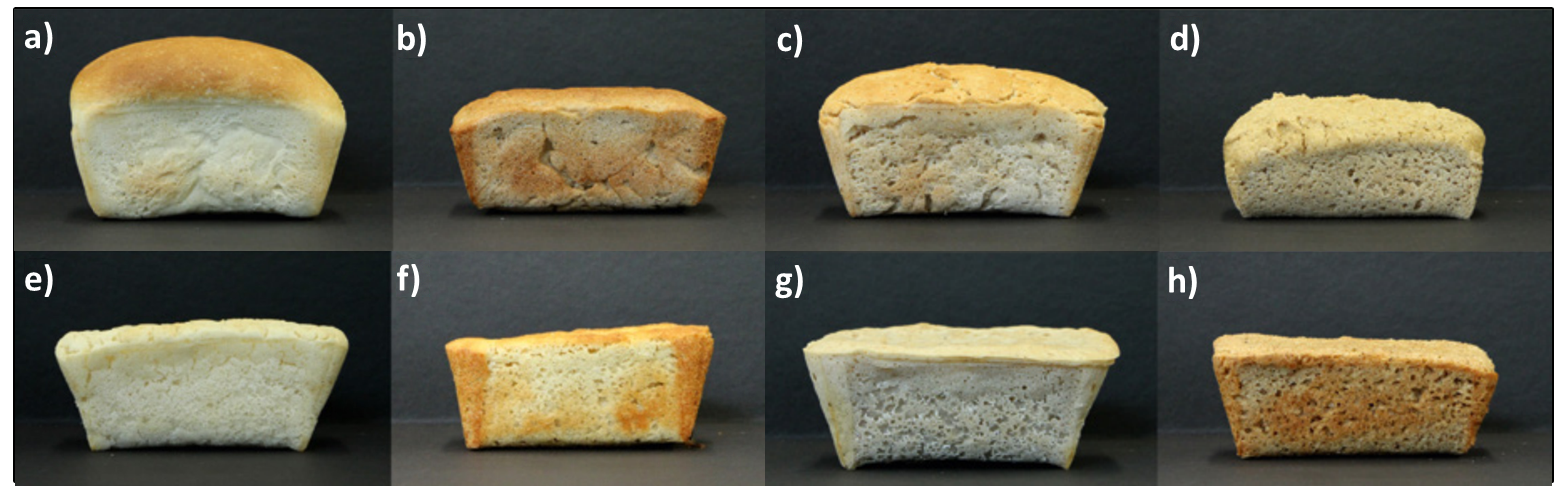
Figure 3: Breads produced from different cereals and pseudocereals.
All breads were prepared according to the same standard recipe with yeast and a staight dough procedure.
a) wheat b) rye c) barley 4) oats 5) rice 6) malze 7) buckwheat 8) millet
Source: Scherf & Köhler 2016 (Fig 1, page 168)