Lesson 3 - Diagnosing Celiac Disease
3.1 Serological tests - When to test and which tests to use
When to test for CeD?
As many patients with CeD remain undiagnosed but may develop severe long-term health consequences, active case-finding is recommended (Ludvigsson et al. 2015). In lesson 2 the various signs and symptoms of CeD have been explained which justify screening for CeD. Furthermore, relatives of CeD patients as well as individuals with other CeD related conditions should be tested even if they are asymptomatic (Unit 1, lesson 1).
In table 3 you find a summary of the symptoms and risk groups.
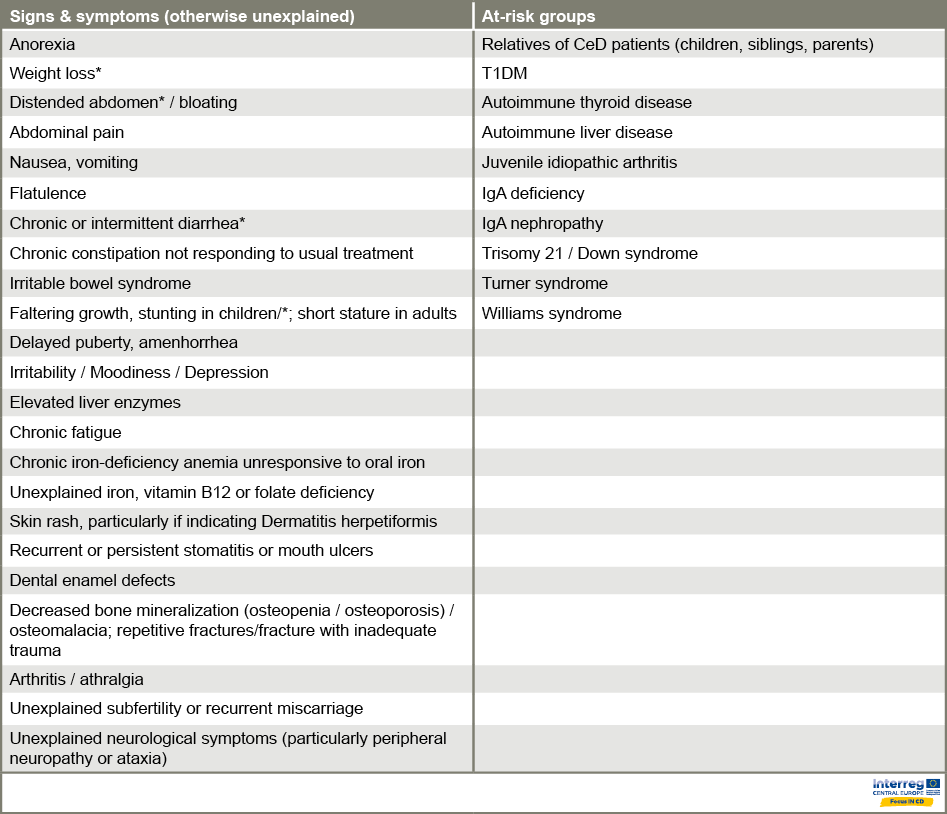
Table 3 – Signs & symptoms as well as risk-groups which are indications for CeD screening
Source: FocusINCD own based on information from Husby et al. 2020, NICE 2015

The first step - Initial testing in patients with suspected CeD
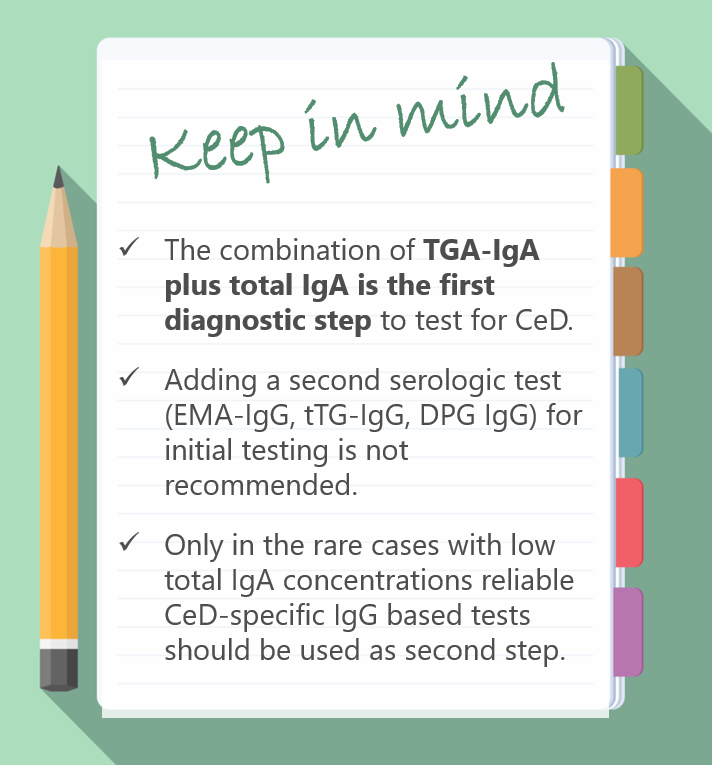
Different blood tests are available, but not all of them are appropriate or accurate. For initial testing the combination of the following two tests are recommended as they are reliable and cost-effective (Husby et al. 2020; NICE 2015; Rashid & Lee 2016; Celiac Disease Foundation 2017):
- IgA class auto-antibodies against tissue transglutaminase (abbreviated with TGA-IgA or tTGA-IgA or tTG-IgA or TG2-IgA): Tissue transglutaminase (TG, tTG or TG2) is an enzyme which is located in the gut and involved in many tasks including tissue repair but also in the deamidation of gluten respectively gliadin. In CeD, the body produces auto-antibodies against its own tissue transglutaminase. The TGA-IgA has a very high sensitivity and high specificity for CeD (as long as gluten consumption has not been reduced). Contrary to previous assumptions it is now known that the TGA-test is also reliable and therefore recommended as test for CeD in very young children (Vriezinga et al. 2014).
- Total immunoglobulin A (total IgA): As total IgA deficiency is more frequent in patients with CeD, total IgA should be analysed once. If the titre of total IgA is very low (below the age-specific level of normal) or undetectable the TGA-IgA result may be a false negative, therefore special tests based on immunoglobulin G (IgG) should be used (e.g. TGA-IgG, or EMA-IgG or DPG-IgG, see below).
May be useful in certain situations - additional serological tests
- IgA class auto-antibodies against endomysium (EMA-IgA): Endomysial auto-antibodies are directed against proteins in the muscle and connective tissue. These antibodies are very specific for CeD. However, EMA-tests are more difficult to perform and more expensive compared to testing for TGA. EMA-testing is usually not needed in patients with positive TGA-IgA in which the diagnosis is confirmed by duodenal biopsies.
- Tests for patients with very low or absent total IgA concentrations in the blood (= total IgA below age-specific limit of normal:
- If a patient has selective IgA deficiency or very low total IgA concentrations in serum (<0.2 g/L or <20 mg/dl) serological tests based on IgA are likely to fail (false negative results). Only in these cases one of the following IgG based test should be used:
- IgG class antibodies against deamidated gliadin peptide (DGP-IgG or GAF-3X): This IgG based test is an option in those patients with very low or absent IgA concentrations in blood (see IgA-deficiency).
- IgG class auto-antibodies against tissue transglutaminase (abbreviated with TGA-IgG or tTGA-IgG or tTG-IgG or TG2-IgG)
- IgG class auto-antibodies against endomysium (EMA-IgG)
How to interpret the results of serological tests?
- All serology tests for CeD require that the tested individual is still eating a normal gluten-containing diet! A low gluten intake may reduce the antibody titers.
- Different laboratories and tests have different upper limits of normal. The laboratory report should include the level of normal and the name and manufacturer of the test (see figure 11).
- Elevated antibody levels of TGA-IgA need to be judged in relation to the cut off value. Values of TGA-IgA, which are more than 10 times above the upper limit of normal, are considered as “very high”. This means that it is not the absolute number of the test result which counts, but the multiple of the cut-off - the higher it is, the more likely is the celiac enteropathy.
- Values of TGA, DGP or EMA just below the cut off or low positive (< 3 times upper limit of normal) must be looked at very carefully (see figure 11, right side). Particularly adolescents and adults with CeD may have values close to the cut off. Often they don‘t eat large amounts of gluten-containing foods. If symptoms do not require a timely endoscopy, serology should be repeated after at least 3 months with increased gluten intake (at least two meals per day with gluten containing foods, e.g. pasta, bread etc.). Low antibody titres may return to normal (transient antibody positivity). If the antibodies are persistently positive, an upper endoscopy with multiple biopsies should be performed.
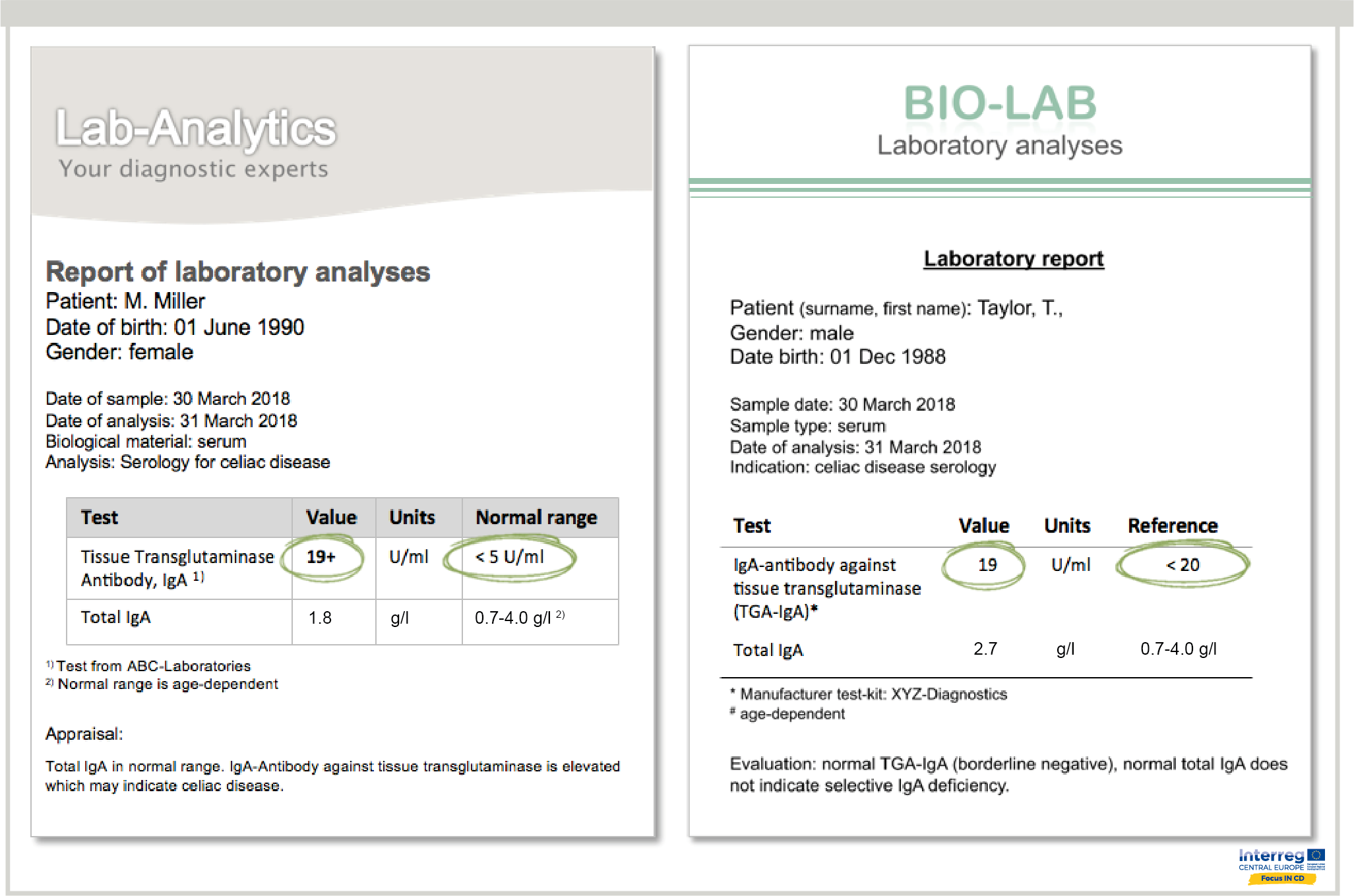
Figure 1 Different lab reports - different levels of normal.
Lab report 1 (left): In patient 1, the IgA-antibodies against tissue transglutaminase (TGA-IgA) are elevated (physicians also say call this a „positive“ result). The value is 19 Units per milliliter (U/ml) and therefore almost 4 times above the level of normal, which is maximum of 5 U/ml. This means patient 1 may have CeD and needs to undergo endoscopy to confirm the diagnosis.
Lab report 2 (right): Patient 2 has the same value of 19 U/ml for TGA-IgA as patient 1. However, here the level of normal (also called reference) is 20 U/ml, because this laboratory uses a test from another manufacturer. The test result for this patient is borderline negative. CeD is not as likely as in the patient 1, but cannot be fully excluded. Total IgA was within normal range, this means a low level of total IgA cannot be the reason for the unclear outcome. Reduced intake of gluten by patient 2 in the period before the blood withdrawal may be one possible explanation. Consequently, the test for TGA-antibodies has to be repeated after some weeks of high gluten consumption.
Rapid tests / Home testing kits
 Rapid tests (home testing kits) for immediate testing of CeD auto-antibodies in blood are nowadays widely available in pharmacies, drug stores and through the internet. They detect the same antibodies as the laboratory tests (mostly TGA), but with a simple yes/no visual reading. In certain settings and countries where a regular laboratory based test is less available, rapid tests may be used as a preliminary screening tool.
However, rapid tests are not sufficient to diagnose CeD. Before reducing gluten intake or initiating gluten-free diet, a reliable laboratory based test (TGA-IgA and total IgA, see above) should be performed (Rashid et al. 2009). To avoid a self-prescribed diet by the patient, it’s important to perform the laboratory test as soon as possible after the rapid test is done.
Please note: Sometimes home-testing kits are also misused as a “safety” test to check for dietary mistakes. This is not the purpose of the test and it is therefore strongly discouraged!