
Lesson 1: Celiac Disease - Definition, Prevalence and Pathogenesis
1.3 Environmental Factors and Prevention
The presence of HLA-DQ2 and/or –DQ8 and the consumption of gluten are obligatory for the development of CeD but not sufficient (Koning et al. 2014). Even within the same HLA risk groups different prevalence of CeD have been reported in screening studies from different countries (Lui et al. 2014). There must be environmental factors that flip the switch and either incite or prevent the immune system from reacting (figure 5).
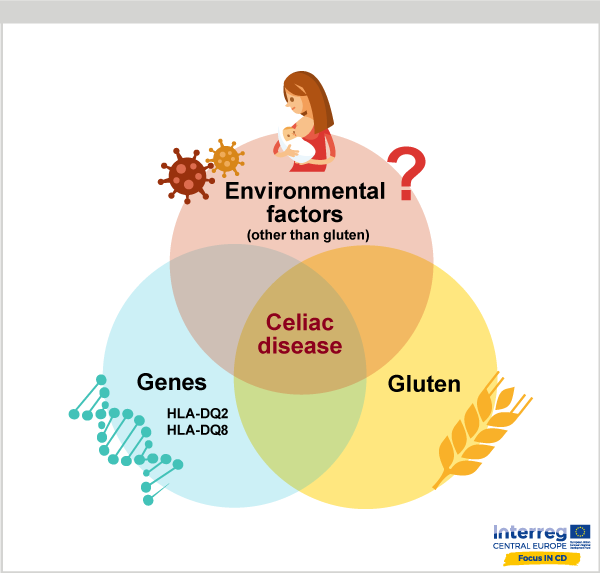
Figure 5: Factors which may cause celiac disease.
With information from Ivarsson A, Myleus A, Wall S. Towards preventing celiac disease - an epidemiological approach. In: Fasano A, Troncone R, Branski D, eds. Pediatric and Adolescent Medicine. New Frontiers in celiac disease. Karger Publishers, Basel, Switzerland)
As early infancy is the most sensitive phase for the priming of the immune system, research is focusing on environmental factors, which play an essential role in the first months of life.
Does early nutrition influence the risk?
The early nutrition of newborns and infants, including the type of infant feeding (breastfeeding or formula feeding) as well as the amount and timing of first gluten introduction with solid food were thought to be associated with the risk for CeD. However, large prospective intervention studies of babies from CeD families revealed that neither the timing of gluten introduction nor the breastfeeding status influences the overall risk (Vriezinga et al. 2014; Lionetti et al. 2014, Szajewska et al. 2015). Delaying the introduction of gluten from 6 to 12 months of age delayed the onset of CeD in some cases, but did not prevent it (Lionetti et al. 2014).
Another large long-term study in newborns with genetic predisposition for T1DM and CeD confirmed that breastfeeding and timing of gluten introduction had no effect on CeD development (Aronsson et al. 2015; Aronsson et al. 2016). However, this study showed that a high amount of gluten consumed within the first 2 years of life seems to double the CeD risk.
Based on these and other studies, nowadays it is recommended to not introduce gluten in complementary feeding before the beginning of the 5th month. Breastfeeding does not reduce the risk for CeD but is highly recommended due to its other beneficial health effects (Szajewska et al., 2016).
What’s the role of microbiota, early infections and vaccinations?
The first contact with microbes happens during birth. Thus, the mode of delivery is essential for the initial intestinal colonization. However, several recent studies show that the risk for CeD is not different between children born by vaginal delivery and children born by cesarean section (Emilsson et al. 2015; Lionetti et al. 2017, Koletzko et al. 2018). Only a huge Danish obvervational study based on data from the national population-based registry found a significant but small association of cesarean section and the risk for CD and other autoimmune diseases. However, these may be explained by residual confounding (Andersen et al. 2020).
Another substantial factor that influences both the microbiota and our immune system are infections in early childhood (Stordal et al 2021, Sanchez et al. 2021). Early gastrointestinal infections may alter the barrier function and have been associated with an increased risk for CeD (Beyerlein et al. 2017, Kemppainen et al. 2017, Caminero et al. 2019). Other mechanism of triggering a pathological immune reaction may be through molecular mimicry between viruses, bacteria and gliadin peptides (Sanchez et al. 2021). In contrast, Herpesvirus or Helicobacter pylori were associated with a reduced risk for CeD (Lebwohl et al. 2013; Jansen et al. 2016; Narang et al. 2017). However, association studies cannot prove a causal relationship, but can generate hypotheses of pathological mechanisms.
Vaccinations in early childhood were not associated with an increased risk for CeD (Myleus et al. 2012). The rotavirus vaccination was even pointing towards a lower risk for its development (Vaarala et al. 2017, Kemppainen et al. 2017). Therefore, children from families with an increased celiac risk should receive all vaccinations as recommended in their country of residence.
What evidence do we actually have?
Although much research has already been done, we know very little about the true environmental factors which shape the risk for CeD. Nevertheless, it’s probably not one single factor but a complex interaction between early nutrition, infections, microbiota and other yet unknown factors that modulate the immune system.