
Lesson 1: Celiac Disease - Definition, Prevalence and Pathogenesis
1.1 Definition, prevalence and risk groups
Celiac disease (CeD,
also known as celiac sprue or previously also known as gluten-sensitive
enteropathy) is a chronic autoimmune-disease that is triggered by gluten
in genetically susceptible individuals. It is characterized by the presence
of CeD-specific autoantibodies, HLA-DQ2 and/or HLA-DQ8 haplotypes and small
bowel mucosal lesions (enteropathy) (Husby et al. 2012) (NICE 2015).
Although the inflammation mainly affects the small intestine, CeD is a systemic
disorder and therefore may also involve other organ systems leading to a
variety of non-specific signs and symptoms. This variable clinical presentation
makes case finding difficult.
Although CeD cannot
be cured, a diet strictly avoiding any gluten containing foods stops the
abnormal reaction of the immune system (Husby et al. 2020 NICE 2015).
Consequently, the intestinal lining will recover and the symptoms will usually
resolve.
With a prevalence
of 1% in the general population, CeD is one of the most common life-long
disorders (Mustalahti et al. 2010; Catassi et al. 2014). Cross sectional
screening studies indicate that about 80 to 90% of CeD cases are undiagnosed
(Laass et al. 2015; Horwitz et al. 2015).
CeD may be diagnosed
at any age. However, the majority of patients already develop the enteropathy
during the first years of life (Agardh et al 2016), but signs and symptoms may
occur or be recognized several years or even decades later. Similar to other autoimmune disorders, CeD is more common in females
with a female to male ratio of approximately 2:1 (Ivarsson et al. 2003;
Bardella et al. 2005).
Certain groups of individuals summarized in Table 1 are at increased risk for CeD. It is recommended that serological screening should be regularly performed in children and adolescents from these risk groups and at least once in adults even if they are asymptomatic (Husby et al. 2012) (Unit 1, lesson 3.3).
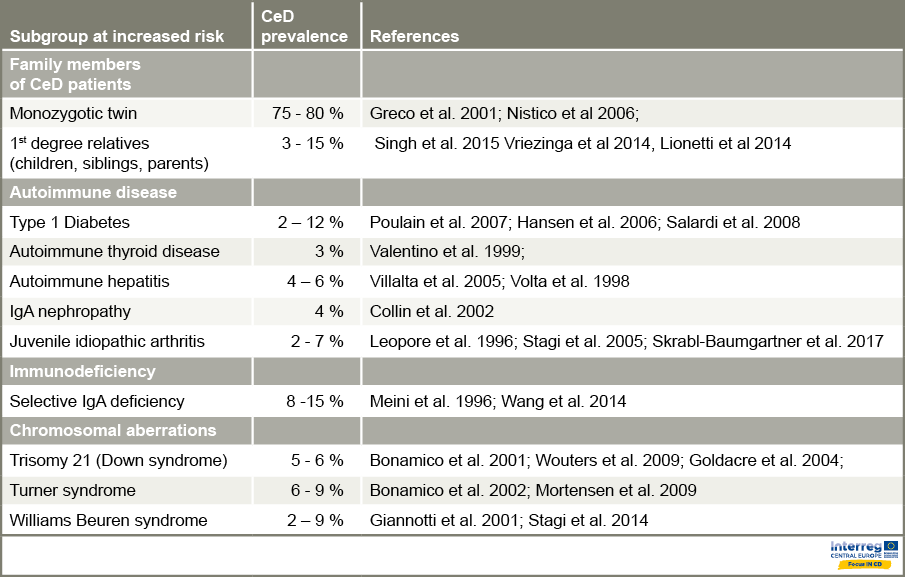
Table 1 – Conditions associated with an increased risk for CeD
Source: ENeA own
As CeD and other autoimmune diseases share similar
HLA-haplotypes,
patients with one of these autoimmune diseases are at increased risk for CeD.
Vice versa, about 1 in 4 patients with CeD will develop at least one other
autoimmune disease.
Furthermore, it’s important to be aware of the higher risk for selective IgA deficiency among patients with CeD as this is relevant for the analysis and interpretation of CeD specific auto-antibodies (Unit 1, lesson 3.1).